For global buyers, Carton Flow Storage is more than a rack with roller tracks. It is a working system that connects replenishment, picking speed, product rotation, and operator safety. A poor choice may look efficient on a quotation sheet, yet create jams, damaged cartons, or unnecessary walking on the warehouse floor.
Dr. John J. Bartholdi III, a respected warehousing researcher, expresses the central principle clearly: “The purpose of a warehouse is to facilitate the movement of goods, not to store them.” That idea should guide every buying decision. Buyers need to examine carton dimensions, weight variation, lane depth, roller spacing, replenishment methods, and expected daily volume. Small details matter. A heavy carton may stop on a light-duty roller. A shallow lane may waste valuable space. A deep lane may slow stock rotation.
These seven tips focus on practical decisions before production begins. They cover flow direction, FIFO suitability, frame strength, adjustable components, installation quality, maintenance access, and supplier verification. Ask for load tests, clear drawings, material specifications, and realistic lead times. Request photos from comparable installations, not only polished catalog images. No layout is perfect. Experienced teams still miss changing carton sizes or seasonal demand. That weakness deserves attention. A reliable Carton Flow Storage solution should support today’s operation while allowing sensible adjustments tomorrow. In global purchasing, clear communication often matters as much as steel, rollers, and price.
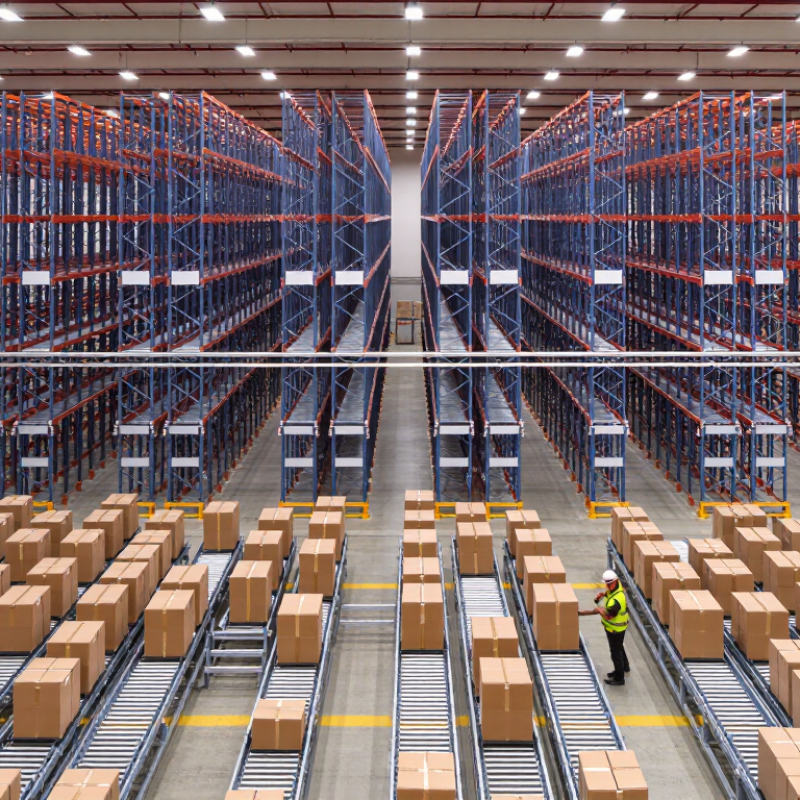
7 Carton Flow Storage Tips for Global Buyers
Assess Your Carton Flow Storage Requirements
Start with the carton, not the rack. Record length, width, height, weight, packaging strength, and daily demand. Measure the largest case, too. Small errors can create costly jams.
Review SKU velocity across at least four weeks. Separate fast, medium, and slow movers before choosing lane depth. WERC’s 2023 DC Measures report places median order-picking accuracy near 99.5%. Your layout should protect that target through clear labels, accessible fronts, and controlled replenishment.
Test the flow lane with real cartons. Check whether cartons roll smoothly, stop safely, and remain visible at the picking face. A lane that works with empty boxes may fail under full loads. Include seasonal peaks, damaged packaging, and mixed carton sizes in the trial. This is where many planning models become too optimistic.
Calculate required capacity using daily demand, replenishment frequency, and safety stock. For example, a lane holding six cartons may need frequent refilling during a peak shift. MHI’s 2024 industry report identifies labor shortages as a continuing supply-chain concern. Design replenishment paths that reduce walking, lifting, and unnecessary handling.
Specify corrosion resistance and load ratings for humid or variable environments. Confirm testing records, maintenance access, and replacement-part availability before purchasing internationally. A lower initial price can hide higher operating costs. Perfect slotting is unlikely; review performance monthly and adjust lane assignments when demand changes.
Measure length, width, height, weight, packaging strength, and daily demand. Include the largest case, not only the common case. Small errors can create jams.
Review at least four weeks of demand. Place fast movers near the picking face and around waist height. Slow movers can use deeper or less accessible lanes. Demand changes. Recheck monthly.
Use real, fully loaded cartons. Check rolling, stopping, visibility, and safe access at the front. Test mixed sizes, damaged packaging, and seasonal peaks. Empty-box trials are too optimistic.
Base capacity on daily demand, replenishment frequency, and safety stock. A lane holding six cartons may need frequent refilling during a busy shift. Set a trigger, such as two cartons remaining.
Load cartons from the rear and verify the front label. Separate reserve stock from active picking stock. Use clear location codes and audit empty lanes each shift. Record the cause.
Keep heavy cartons below shoulder height and protect walkways from falling cartons. Use rear stops where needed. Maintain clear aisles and visible load labels. Do not guess.
Inspect rollers, frames, brakes, labels, and aisle clearance every month. Test rollers with loaded cartons. Replace damaged parts quickly. Bent rails are not harmless.
Request load ratings, testing records, material documents, installation instructions, warnings, and replacement-part details. Check local requirements for the installation country. Customs paperwork alone proves little.
Carton Flow Storage can help global buyers improve warehouse efficiency, order accuracy, and inventory visibility when it is planned around actual operational needs. Start by assessing available space, product characteristics, order volume, picking frequency, and future growth. Then select a rack design and roller configuration that match carton dimensions, weight, handling methods, and aisle requirements. Proper planning should also define load capacity, carton compatibility, stock rotation rules, and replenishment priorities to support consistent first-in, first-out workflows where appropriate.
Efficient procedures are equally important. Standardize how cartons are loaded, picked, and replenished, while keeping labels visible and frequently picked products easy to access. Buyers should also review safety features, inspection routines, maintenance schedules, and worker training before implementation. Finally, confirm that the system can meet applicable regional requirements for workplace safety, equipment performance, and logistics operations. A well-designed solution should balance durability, flexibility, ease of maintenance, and long-term operating value across different warehouse environments.

 Sanyang Racking