How to Choose Longspan Storage Shelving in 2026?

Time:2026-09-16 Author:Oliver
0%

Choosing Longspan Storage shelving in 2026 requires more than comparing prices or beam lengths. It requires a clear view of inventory, handling equipment, building conditions, and future growth. MHI’s 2024 Annual Industry Report found that 55% of supply chain professionals planned to increase technology investment. It also reported strong interest in artificial intelligence and automation. These trends matter because shelving increasingly supports barcode scanning, mobile picking, and data-led replenishment.

Warehouse space remains expensive. The 2025 CBRE Industrial and Logistics Occupier Survey highlighted continuing pressure on operating costs and facility efficiency. A poorly planned shelving system can waste valuable floor space through wide aisles, unused height, or difficult access. Measure the actual load first. Record carton dimensions, pallet weights, picking frequency, and forklift turning paths. Then compare adjustable beam levels, frame capacity, deck types, and expansion options. A 2.4-metre beam may look efficient, but it can become awkward when workers handle long cartons by hand.

Small details matter.

Industry guidance from the Rack Manufacturers Institute emphasizes capacity labeling, inspection, and professional design review. These practices help reduce avoidable failures during daily operations. Still, no report replaces an on-site assessment. Floor condition, ceiling clearance, lighting, and local engineering requirements can change the correct choice. Forecasts can also miss sudden product changes. That is an uncomfortable reality. Therefore, this guide examines Longspan Storage through practical selection criteria, verified industry evidence, and cautious planning. The aim is not to recommend the largest system, but the safest, most adaptable, and economically sensible solution for 2026.
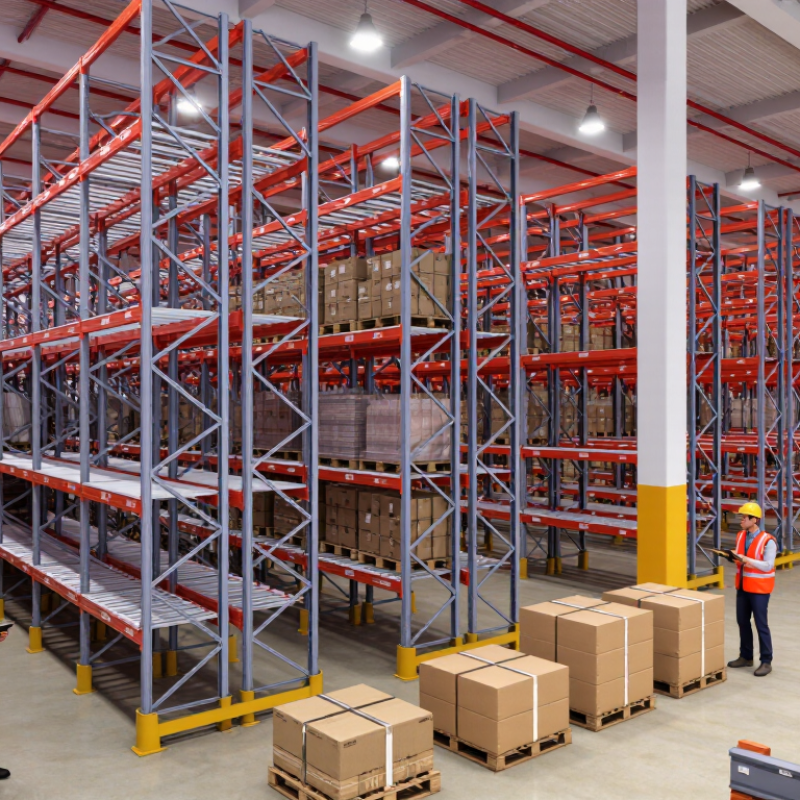
How to Choose Longspan Storage Shelving in 2026?

Define the 2026 Use Case: SKU Count, Load Weight, Span, and Access

How to Choose Longspan Storage Shelving in 2026?

Define the use case before comparing shelving. Count active SKUs, not every item ever received. Separate fast movers from seasonal stock. A 2024 warehouse benchmarking report places median order-picking accuracy near 99.5%, showing how small access errors can affect performance. Your target should be equally specific. For example, 480 SKUs may need twelve bays, but only 70 require daily access.

Measure load weight at the shelf level. Record the heaviest carton, average carton, and possible future increase. Use evenly distributed loads when checking capacity. A 300-kilogram shelf is not automatically safe for one concentrated box. Measure the required span between uprights, too. Longer spans reduce supports, but they can increase beam deflection. That trade-off is easy to underestimate.

Access often decides the layout. Hand-loaded shelves suit mixed cartons and frequent picking. Deeper shelves may hold more stock, yet they can hide slow-moving cartons behind active ones. The 2024 MHI Annual Industry Report identified labor shortages as a continuing concern for 55% of respondents. This supports shorter travel paths and clearer locations. Still, my first layout is rarely perfect. SKU counts change, and staff create informal shortcuts. Test one bay with real cartons, labels, and reach distances before expanding the full system. Good data helps, but the warehouse floor remains the honest audit.

Size Bays by Rated Capacity Under ANSI/RMI MH16.1 Load Rules

How to Choose Longspan Storage Shelving in 2026?

Longspan shelving should be sized by rated capacity, not appearance. Under ANSI/RMI MH16.1 load rules, check the allowable load for each beam level and the complete bay. A shelf rated for 500 pounds does not automatically make the whole unit safe. The frame, beam connections, decking, and anchors must work together.

Measure the actual load first. Record the heaviest carton, the number of cartons per level, and their spacing. Loads should normally be distributed across the shelf, rather than concentrated at one corner. Keep heavier items on lower levels. Leave clearance between stored goods and the uprights. A 96-inch-wide bay may hold less than expected if cartons create uneven loading or exceed the clear span.

Ask for documented capacity tables, testing details, and installation requirements. Verify whether ratings assume uniformly distributed loads, specific beam lengths, or anchored frames. Local floor conditions can change the decision. An engineer should review unusual layouts, high bays, impact exposure, or seismic risk. A common mistake is trusting a label without checking its assumptions. I have seen plans fail on paper because the selected capacity ignored the actual carton footprint. Recheck after installation. Storage habits change, and the original calculation may no longer match the aisle.

How to Choose Longspan Storage Shelving in 2026?

Size Bays by Rated Capacity Under ANSI/RMI MH16.1 Load Rules

The chart shows planning scenarios for uniformly distributed loads. Each example assumes a 2,000 lb rated load per beam level, so total bay capacity increases with the number of loaded levels. ANSI/RMI MH16.1 does not assign one universal capacity to every shelving bay; the final selection must use the tested or engineered rating for the exact upright, beam, connection, span, decking, and load configuration. Never exceed the posted manufacturer capacity or apply concentrated loads without verification.

Match Decking and Frames to 500–2,000 lb Shelf Loads

Choosing longspan shelving in 2026 starts with the shelf, not the catalog photograph. The stated 500–2,000 lb load must mean evenly distributed load per level. A concentrated motor or carton stack changes the calculation. I have seen apparently strong shelves sag because the decking was treated as decoration.

The Material Handling Institute’s 2024 Annual Industry Report surveyed more than 1,000 supply-chain professionals. It found 55% cited labor shortages as a challenge, making fast, safe access increasingly practical. For 500–1,000 lb levels, wire or formed-steel decking may suit ventilated storage. Heavier 1,000–2,000 lb levels usually need heavier-gauge panels, closer supports, or structural steel decking. Verify each panel’s clear-span rating, not merely its total capacity. Frames must carry the combined load of every shelf, plus reasonable impact allowances. Use the design method referenced by ANSI/RMI MH16.1-2023, and obtain stamped calculations where required.

Measure the actual bay width and depth. Then check beam deflection, upright height, anchors, and floor condition. Leave clearance around sprinkler heads and moving equipment. A 2,000 lb rating is useless if the load sits on four small feet. My imperfect rule is simple: specify the load pattern before selecting the panel. Recheck after installation; operators often add heavier cartons than the original plan allowed.

How to Choose Longspan Storage Shelving in 2026? — Match Decking and Frames to 500–2,000 lb Shelf Loads
Target Shelf Load Typical Use Case Recommended Decking Frame and Beam Considerations Suggested Shelf Span Load Distribution Key Safety and Selection Checks
500–750 lb Small cartons, packaged parts, light tools, office or maintenance supplies Steel panels, wire decking, or 3/4-inch plywood supported continuously by the beams. Wire decking is useful where visibility and air circulation are priorities. Use a light-to-medium-duty bolted or clip-in frame with beams rated above the intended load. Uprights should be anchored when required by the installation environment. Typically 48–72 in. Spread the load across the shelf; avoid concentrating more than about one-third of the capacity in a small area. Confirm beam deflection, upright capacity, shelf connector engagement, and floor condition. Keep heavier items on lower levels.
751–1,000 lb Medium cartons, automotive components, hardware bins, and mixed inventory Heavy-gauge steel panels, reinforced wire decking, or structural plywood. Choose decking with intermediate support when the clear span is wide. Select medium-duty frames with adequate upright-gauge capacity and positive beam locks. The beam pair must be rated for the complete shelf load, not for each beam separately unless stated. Typically 60–84 in. Use full-depth decking and distribute cartons evenly from front to back and side to side. Check the rated capacity at the actual beam elevation and span. Do not assume a higher rating at the bottom level applies to every shelf.
1,001–1,250 lb Dense parts, industrial containers, bulk packaged goods, and heavier maintenance stock Reinforced steel decking or structural plywood on closely spaced supports. Wire decking should be selected only when its concentrated-load rating is suitable. Use heavier frames and beams designed for the required shelf load. Consider additional beam levels, upright bracing, and a rear or side retainer for unstable items. Typically 72–84 in. Place the load over the supported deck area; use pallets, dunnage, or load-spreading boards for point loads. Review point-load limits, total bay capacity, frame height-to-depth ratio, and anchoring requirements. Keep aisles clear of projecting loads.
1,251–1,500 lb Heavy machine parts, compact material bins, motors, pumps, and dense inventory Heavy-duty steel panels or structural plywood with sufficient thickness and intermediate beam support. Avoid unsupported plywood edges and thin sheet decking. Use heavy-duty frames with braced uprights and beams engineered for the specified span. A shorter span or an additional support beam may be preferable to simply increasing material thickness. Typically 72–96 in. Load the shelf progressively from the back and distribute weight across multiple supports. Verify the complete system rating, including frames, beams, connectors, decking, and anchors. Inspect for bent members, loose connectors, and damaged decking before use.
1,501–1,750 lb Very dense components, boxed mechanical equipment, industrial supplies, and high-volume stock Reinforced steel decking or engineered structural panels supported at intervals suited to the span. Use edge supports where panels could deflect or shift. Select a heavy-duty frame system with high-capacity beams, rigid bracing, and mechanically secured connections. Consider reducing shelf width or adding a front-to-back support if deflection is excessive. Typically 72–96 in.; shorter spans may improve stiffness Use load-spreading surfaces for narrow feet, drums, legs, or other concentrated contact points. Check both uniformly distributed load and concentrated-load ratings. Review seismic, impact, and forklift exposure where applicable.
1,751–2,000 lb Heavy industrial parts, dense equipment, large component containers, and high-load warehouse stock Heavy-gauge steel decking or engineered structural decking with verified support spacing. Do not use standard light-duty wire panels or unsupported thin plywood for this range. Use an engineered heavy-duty longspan system with high-capacity beams, braced frames, secure connectors, and suitable floor anchoring. A shorter beam span or added support is often required. Typically 72–96 in.; confirm by system calculation Keep the center of gravity low and centered; distribute the load across the full usable shelf area. Obtain a system-specific capacity chart or engineering confirmation. Confirm floor slab capacity, anchorage, clearances, and protection from vehicle impact.

Planning note: The ranges above are general selection guidelines, not a substitute for the shelving manufacturer’s tested capacity chart or a site-specific structural review. Actual capacity depends on beam span, frame height and depth, steel thickness, connector design, decking support spacing, load placement, floor conditions, and local regulations.

Plan Sprinkler Clearances: NFPA 13’s 18-Inch Minimum

Choosing longspan storage shelving in 2026 should begin with fire protection, not shelf capacity. NFPA 13 commonly requires at least 18 inches of vertical clearance between sprinkler deflectors and the top of stored materials. This space allows water to spread across the storage area. It is not spare storage space.

Measure from the lowest sprinkler deflector to the highest realistic load point. Include carton bulges, loose packaging, and items placed on the top shelf. A shelf that appears compliant when empty may fail after loading.

I have seen clearance disappear when boxes lean into the sprinkler zone. Small details matter.

Select shelving with adjustable beam levels and enough height for a permanent safety gap. Keep aisles clear, control shelf overhang, and mark the maximum storage line visibly.

The 18-inch rule may not fit every storage arrangement. Commodity type, storage height, sprinkler design, and ceiling conditions can change the requirement. Check the adopted NFPA 13 edition and confirm the layout with a qualified fire protection professional or the local authority having jurisdiction.

Do not treat a generic diagram as final approval. Measure again after installation. That step is easy to skip.

Verify Safety and Stability Under OSHA 1910.176(b) Requirements

How to Choose Longspan Storage Shelving in 2026?

OSHA 1910.176(b) requires stored materials to avoid creating hazards. It also requires clear, unobstructed passageways where materials are handled. Treat this as an operating rule, not paperwork. Select shelving with documented load ratings, level frames, positive beam locks, and adjustable bays. Keep rated capacity visible at every working aisle. A missing label is a small warning.

The U.S. Bureau of Labor Statistics recorded 865 fatal falls, slips, and trips at work in 2022. That figure covers many industries, yet it shows why aisle discipline matters. Measure forklift clearance with the largest load, not an empty pallet. Check floor cracks, upright plumb, base plates, and anchor conditions before loading. OSHA’s Warehousing Safety and Health guidance identifies struck-by and material-handling hazards as recurring concerns. Do not assume a heavier shelf is automatically safer.

Schedule documented inspections after relocation, impact, or unusual loading. Remove damaged components until a qualified person evaluates them. Never mix unverified beams with tested frames. ANSI MH16.1 provides recognized structural guidance for industrial steel storage racks, but site conditions still matter. A perfect layout can fail through poor housekeeping. That is the uncomfortable part. Review actual loading behavior monthly, and revise the design when workers improvise.

FAQS

How should I define my shelving needs before choosing a system?

Count active SKUs, not every item received over the years. Separate daily movers from seasonal cartons. For example, 480 SKUs may need twelve bays, while only 70 need daily access.

What load information should I record?

Record the heaviest carton, average carton, and possible future weight increases. Check each shelf level separately. A 300-kilogram shelf may not safely support one concentrated box.

Why does shelf span matter?

Longer spans use fewer uprights but may increase beam deflection. Measure the clear distance between supports. A wide shelf can hold less than expected when cartons sit unevenly.

How should cartons be arranged on each shelf?

Distribute loads across the shelf surface. Keep heavier cartons on lower levels. Leave clearance beside uprights. Do not rely on the capacity label alone.

What access layout works best for frequent picking?

Hand-loaded shelves suit mixed cartons and regular picking. Keep active products near comfortable reach zones. Deep shelves may hide slow-moving cartons behind daily orders.

How can I reduce walking and handling problems?

Use shorter travel paths and clear location labels. Measure access with real cartons, not empty shelves. Staff may create shortcuts anyway.

What should I test before installing the full system?

Build one trial bay with actual cartons, labels, and reach distances. Watch how workers load and pick it. My first layout is rarely perfect.

How can I check shelving stability after installation?

Inspect level frames, beam locks, anchors, floor cracks, and upright alignment. Keep passageways unobstructed. Check clearance using the largest loaded pallet.

What should happen after damage, relocation, or unusual loading?

Document an inspection and remove damaged parts from service. A qualified person should evaluate them. Recheck capacity when storage habits change.

How often should warehouse loading behavior be reviewed?

Review actual loading monthly. Compare carton weights, positions, aisle use, and informal shortcuts. The original calculation may no longer match reality.

Conclusion

Choosing Longspan Storage shelving in 2026 starts with clearly defining the application. Evaluate the number of SKUs, item dimensions, load weights, required shelf spans, and how frequently goods must be accessed. These factors help determine the right bay size, frame configuration, and capacity rating. Each shelf should be selected according to its intended load and verified against ANSI/RMI MH16.1 requirements, with capacity labels and safe loading practices clearly established.

For shelf loads between 500 and 2,000 pounds, match the decking material and frame strength to the actual operating conditions, including impact risk and storage frequency. Plan aisle layouts and vertical clearances carefully, maintaining the 18-inch minimum clearance below sprinkler systems where NFPA 13 applies. Finally, inspect the system for stability, secure placement, and proper load distribution to support OSHA 1910.176(b) expectations. A well-planned solution improves access, safety, durability, and long-term storage efficiency.

Oliver

Oliver

Oliver is a seasoned marketing professional with a wealth of expertise in driving brand awareness and engagement. With a deep understanding of our company's product offerings, he consistently delivers high-quality content that enriches our professional blog. His insights not only shed light on......