China Top Push-Back Storage Rack Suppliers? This question deserves more than a supplier directory. A reliable answer must connect rack design, warehouse conditions, product movement, and long-term operating costs. Push-Back Storage can increase pallet density while reducing aisle requirements. It suits last-in, first-out inventory, especially for similar products stored in multiple pallet positions.
James A. Tompkins, a respected warehousing authority and founder of Tompkins Associates, once stated, “The warehouse is the heart of the supply chain.” His observation remains practical. A rack system affects receiving, replenishment, picking, safety, and inventory control. It is not merely a steel structure.
Chinese manufacturers now offer different Push-Back Storage solutions, including nested carts, roller-based designs, and customized frames. Their capabilities can vary widely. Some suppliers provide strong engineering support, while others compete mainly through low prices. That difference becomes visible when pallets move unevenly, forklifts approach at awkward angles, or channels require unexpected maintenance.
This guide examines China’s leading Push-Back Storage rack suppliers through a practical lens. It considers load ratings, steel quality, surface treatment, pallet compatibility, testing, installation support, and export experience. Factory audits and clear drawings matter. So do references from warehouses using similar loads.
No supplier is perfect. Even a well-designed rack may perform poorly with damaged pallets or inconsistent loading habits. Buyers should question impressive claims. They should request calculations, inspection records, warranty terms, and realistic delivery schedules. A careful comparison may take longer, but it can prevent expensive changes after installation.
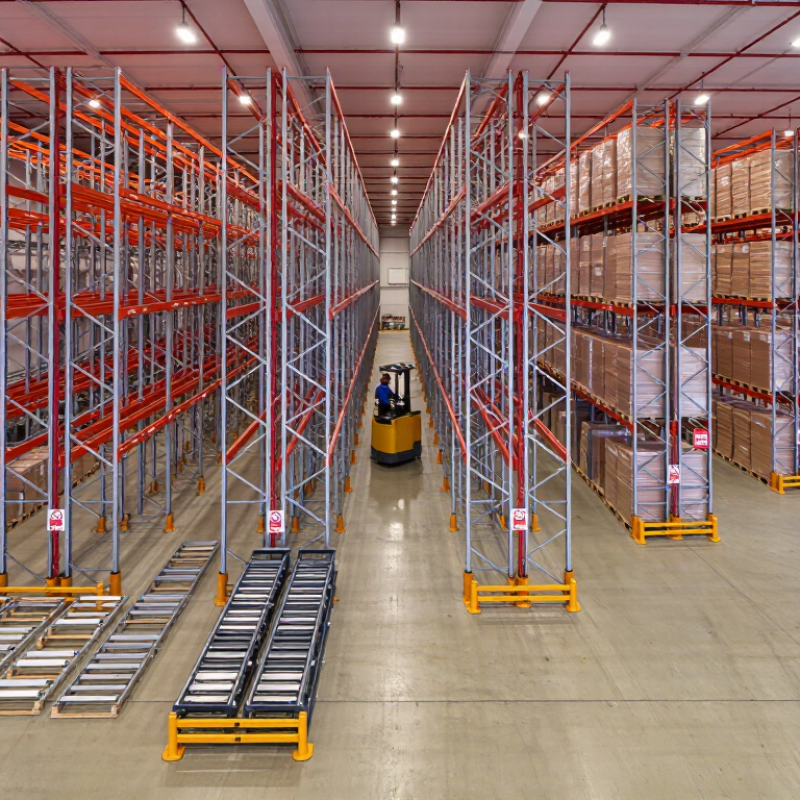
Push-Back Racking Fundamentals: 2–6 Pallet Positions and LIFO Storage
Push-back racking stores pallets on wheeled carts within each lane. Most systems provide two to six pallet positions in depth. A forklift loads the front pallet and gently pushes it backward. During picking, the nearest pallet moves forward automatically. This creates last-in, first-out storage, or LIFO. It suits products with stable demand and limited date sensitivity.
In practical warehouse layouts, each lane should hold one stock-keeping unit whenever possible. Mixing similar cartons can create picking errors. Operators also need clear weight ratings, sound pallets, and enough aisle space for controlled forklift movement. A slightly damaged pallet may roll unevenly or stop against the rear frame. That small issue can become a serious delay.
Keep the lanes disciplined.
Routine inspections should check rails, carts, guides, frames, and pallet overhang. Supervisors can mark maximum load depth at eye level, making daily checks easier. Two-deep storage often improves access, while six-deep storage usually delivers stronger density. The best choice depends on turnover, product rotation, and handling equipment. I have seen dense layouts reduce travel time, but only when slotting rules were followed. That assumption can fail. Fast-moving products may need selective access instead of deeper LIFO lanes. Stable loading practices and trained operators remain essential for reliable performance.
China Top Push-Back Storage Rack Suppliers
A reliable push-back rack supplier should prove performance, not only show attractive drawings. For pallet loads between 500 and 2,000 kg, request load calculations, beam data, and trolley specifications. Each storage level must handle repeated loading without excessive deflection. Ask how the design manages impact from forklifts and uneven pallets. Small details matter.
A claimed 75% space utilization needs careful checking. It usually depends on aisle width, rack depth, pallet dimensions, and building height. Deeper lanes can reduce travel space, but they may limit stock rotation and visibility. Push-back systems normally support efficient last-in, first-out storage. That suits products with stable batch requirements, but not every inventory profile. Measure twice.
During supplier evaluation, review steel thickness, welding quality, surface treatment, and installation procedures. Ask for inspection records and a sample calculation based on your actual pallet size. A professional supplier should explain acceptable tolerances in plain language. They should also provide guidance for anchors, guards, and routine inspections.
The 75% figure is only an estimate. Real warehouses often lose capacity around columns, doors, sprinklers, or irregular floor areas. This is where practical site experience becomes valuable. A responsible supplier should admit these limitations instead of promising perfect utilization. Request references for similar load ranges, then compare delivered results with the original layout. Expect revisions.
China’s top push-back storage rack suppliers should explain safety compliance clearly, not rely on attractive catalogs. FEM 10.2.02 guidance and EN 15512 principles help evaluate structural design, load capacity, and operational risks. A reliable supplier should provide signed calculations, steel grades, connection details, and testing records. Ask for documents, not promises.
Push-back racks experience different forces from standard pallet racking. Loaded carts move along rails, while forklifts place pallets at changing heights. Suppliers should check upright strength, beam deflection, rail supports, impact loads, and required clearances. Pallet dimensions matter greatly. So does pallet condition. One damaged pallet can change the risk.
A practical review should compare the proposed design with actual warehouse measurements. Check floor flatness, aisle width, operating temperature, forklift specifications, and maximum pallet weight. The supplier should install visible load notices and provide inspection guidance. Traceable material certificates and welding records add credibility.
Still, paperwork is not enough. A certificate may cover a tested configuration, not every project variation. I would ask whether the calculations match the final rack layout, cart type, and loading pattern. An independent inspection can expose small gaps before installation, although it may slow procurement. That inconvenience is often worth accepting.
Comparing China push-back rack suppliers starts with the steel, not the sales presentation. Ask for load drawings, beam profiles, trolley dimensions, and finish specifications. An experienced supplier should explain pallet weight, aisle depth, and lane levels clearly. Request a sample bay or detailed assembly photos. Small details matter. Check weld consistency, upright holes, roller alignment, and protective guards. In one warehouse project, we focused too heavily on price. That mistake caused extra installation adjustments.
Testing should be documented, not simply promised. Ask for static load results, trolley cycle tests, coating checks, and incoming steel records. Confirm the test load, duration, equipment, and acceptance limits. Independent inspection can verify dimensions and weld quality before shipment. Suppliers should provide traceable batch records and corrective-action procedures. A useful factory visit includes measuring a finished frame and observing a loaded test. Photos alone are weak evidence.
Lead time needs dates for cutting, welding, coating, packing, and dispatch. Clarify which delays require notification, especially after drawing changes. Compare warranty terms carefully. A credible warranty defines coverage, exclusions, response time, and replacement responsibilities. Ask how spare parts are labeled and shipped. We once underestimated port handling time, making our estimate too optimistic. Now we add a realistic buffer and confirm every milestone in writing. Record that buffer in the purchase schedule, not in a private note.
China Top Push-Back Storage Rack Suppliers?
Rail quality should lead the procurement checklist. Request steel grade, rail thickness, weld procedures, and load-test records. Rails must remain straight under rated loads. Small alignment errors can make carts hesitate or roll unevenly. Measure twice. The 2024 MHI Annual Industry Report reports that 83% of supply-chain professionals expect artificial intelligence to influence operations within five years. That pressure increases the value of accurate inventory movement and dependable rack mechanics.
Cart performance needs practical testing, not only catalog numbers. Inspect wheel diameter, bearing protection, stopping control, and pallet contact points. Test the cart with the heaviest approved pallet. Check repeated cycles, not one smooth demonstration. A 2023 Interact Analysis report valued the global warehouse automation market at approximately $37.6 billion. This investment trend makes mechanical reliability more important, especially where labor must handle exceptions quickly.
Installation quality can change the rack’s real capacity. Confirm floor flatness, anchoring details, aisle clearance, and seismic requirements with qualified engineers. Ask for installation drawings, inspection records, and operator training. Service response should include spare wheels, rail components, inspection intervals, and a named technical contact. I would also require a written warranty. It feels excessive, but unclear service terms create expensive delays. A perfect checklist still misses site habits, so observe how workers actually load and retrieve pallets before final approval.
| Evaluation Dimension | Recommended Technical Requirement | Verification Method | Acceptance Criteria | Weight | Priority |
|---|---|---|---|---|---|
| Rail Material and Grade | Structural steel rail profile selected for the specified pallet load, channel depth, and operating temperature. | Review mill certificates, steel grade, rail profile drawings, and approved engineering calculations. | Material certificates are traceable to the supplied rails; design documents state allowable load, span, and deflection limits. | 15% | Critical |
| Rail Alignment and Level | Continuous, accurately aligned rails with no steps, sharp edges, excessive gaps, or obstruction at splice points. | Check installation survey records and measure rail elevation, straightness, and splice condition on site. | Rail alignment complies with the approved shop drawings and the tolerance limits defined in the installation method statement. | 10% | Critical |
| Rail Load and Deflection | Rail capacity must cover the rated pallet load, cart self-weight, impact effects, and the number of pallets stored in each lane. | Review structural calculations and perform a controlled loaded-lane trial using the specified pallet mass. | No permanent deformation, buckling, abnormal noise, or loss of cart movement during the loaded trial. | 12% | Critical |
| Cart Rated Capacity | Each cart must be rated for the declared pallet weight, pallet footprint, load distribution, and lane slope. | Compare cart nameplates and technical data sheets with the approved load plan; conduct a loaded movement test. | Cart rating is equal to or greater than the specified pallet load, with documented test conditions and safety margin. | 12% | Critical |
| Wheel and Bearing Performance | Wheels must match the rail profile and provide stable rolling under full load without binding or excessive wear. | Inspect wheel material, bearing specification, wheel diameter, guards, lubrication requirements, and trial-run results. | All wheels rotate freely; carts travel smoothly through the full lane; no derailment, flat spots, or abnormal vibration is observed. | 10% | Critical |
| Pallet Compatibility | Rack clearances must suit the actual pallet length, width, height, entry direction, and condition of the pallet fleet. | Measure representative pallets and confirm clearance drawings for the largest and smallest approved pallet dimensions. | Pallets are centered and stable without contacting uprights, rails, back stops, carts, or adjacent loads. | 8% | High |
| Entry and Stop Safety | Include front stops, rear stops, end guards, cart retainers, pallet position indicators, and protection for exposed rack members. | Review safety-detail drawings and inspect every lane after installation and before operation. | All specified safety devices are installed, secure, visible, and compatible with forklift access and operating procedures. | 10% | Critical |
| Installation Engineering | Supplier provides layout drawings, anchor plans, method statements, installation sequence, and interface details for the warehouse floor. | Check approved drawings, installer qualifications, floor survey, anchor installation records, and as-built documentation. | Installation is completed by trained personnel and matches the approved design without unauthorized field modifications. | 10% | Critical |
| Surface Treatment and Corrosion Protection | Coating system must match the warehouse environment, including humidity, temperature, wash-down exposure, and outdoor handling risk. | Verify coating specification, surface preparation, dry-film thickness records, and visual finish quality. | Coating is continuous and free from rust, peeling, sharp runs, exposed steel, and transport or installation damage. | 5% | Medium |
| Testing and Commissioning | Supplier must provide a documented inspection and testing plan covering unloaded, partially loaded, and fully loaded operating conditions. | Witness functional tests, record nonconformities, and sign an installation and commissioning checklist. | Every lane completes the agreed test sequence, and all corrective actions are closed before handover. | 6% | High |
| Documentation and Compliance | Provide load tables, drawings, operating instructions, maintenance intervals, spare-parts list, inspection records, and applicable compliance documents. | Audit the document package against the purchase specification and local warehouse safety requirements. | Documents are complete, version-controlled, written in the required language, and consistent with the delivered equipment. | 5% | High |
| Warranty and After-Sales Service | Define warranty coverage for rails, carts, wheels, bearings, frames, coating, workmanship, and replacement parts. | Review warranty terms, service contacts, escalation process, spare-parts availability, and response-time commitments. | Written service procedure identifies response targets, exclusions, replacement-part lead times, and responsibilities of both parties. | 7% | High |
| Total Procurement Evaluation Weight | 100% | — | |||
Request signed structural calculations, steel certificates, welding records, and load-test results. Ask for connection details and installation drawings. Promises are not enough. Documents should match the final rack layout.
Loaded carts move along rails while forklifts place pallets at different heights. Engineers should check upright strength, beam deflection, rail supports, impact loads, and clearances. One damaged pallet can change the risk.
A bent pallet may sit unevenly on the cart. That can affect balance, contact points, and rolling behavior. Inspect the heaviest approved pallet, not only a perfect sample. Small flaws matter.
Request the rail steel grade, thickness, welding procedure, and load-test records. Rails should stay straight under rated loads. Measure alignment carefully. Small errors may make carts hesitate or roll unevenly.
Check wheel diameter, bearing protection, stopping control, and pallet contact points. Test the cart with the heaviest approved pallet. Repeat many loading cycles. One smooth demonstration proves very little.
Compare the design with actual floor flatness, aisle width, temperature, and forklift specifications. Confirm maximum pallet weight and required clearances. Seismic conditions may also affect the design. Measurements can be inconvenient, but guessing is worse.
Confirm anchoring, floor conditions, aisle clearance, and installation tolerances. Qualified engineers should review the final arrangement. Keep inspection records and provide operator training. Installation can quietly reduce capacity.
Request spare wheels, rail components, inspection intervals, and a named technical contact. Require a written warranty and visible load notices. Independent inspection may slow purchasing. I would still accept that delay.
Push-Back Storage systems provide an efficient solution for high-density pallet storage, typically supporting two to six pallet positions per lane and operating on a LIFO basis. When selecting a China-based supplier, buyers should evaluate load capacities commonly ranging from 500 to 2,000 kg per pallet, as well as the system’s ability to improve warehouse space utilization by up to approximately 75%. Rack design should match pallet dimensions, product flow, forklift operation, and available building space.
Safety and long-term performance are equally important. Suppliers should demonstrate designs and testing aligned with recognized standards such as FEM 10.2.02 and EN 15512, while providing clear technical documentation. A thorough comparison should cover engineering capability, testing procedures, production lead time, warranty terms, rail quality, cart movement, installation guidance, and after-sales service. Before placing an order, purchasers should confirm load calculations, corrosion protection, delivery scope, installation responsibilities, spare-part availability, and staff training to ensure reliable and safe operation.

Sanyang Racking