Global buyers will enter 2026 with sharper questions about Steel Containers. Price still matters, but it no longer tells the whole story. A container may look strong on a warehouse floor, yet fail through corrosion, poor door alignment, or weak corner castings during repeated handling.
UNCTAD’s Review of Maritime Transport 2024 recorded global maritime trade growth of about 2.4% in 2023. It also projected continued expansion, near 2% in 2024. These figures suggest sustained demand for dependable cargo equipment. They also expose a practical concern: buyers need containers that remain serviceable across ports, climates, and transport cycles. The ISO 1496-1 standard provides a technical reference for general-purpose freight containers, while the CSC Convention supports safety approval for international movement. Compliance should be verified, not assumed.
Container-shipping analyst Lars Jensen has repeatedly stressed, “There is no such thing as a new normal.” That warning matters for 2026 purchasing decisions. Route disruptions, changing cargo patterns, and uncertain steel costs can quickly challenge a fixed buying strategy.
This guide examines the 2026 top Steel Containers for global buyers through durability, payload, corrosion protection, repair access, certification, and total ownership cost. Some rankings remain subjective. A premium coating may justify its cost in coastal service, but not in a dry inland network. That distinction is easy to miss. I may also overvalue long-term durability when a buyer needs faster deployment. The strongest choice is not always the newest container. It is the one that fits the route, cargo, handling equipment, and maintenance reality.
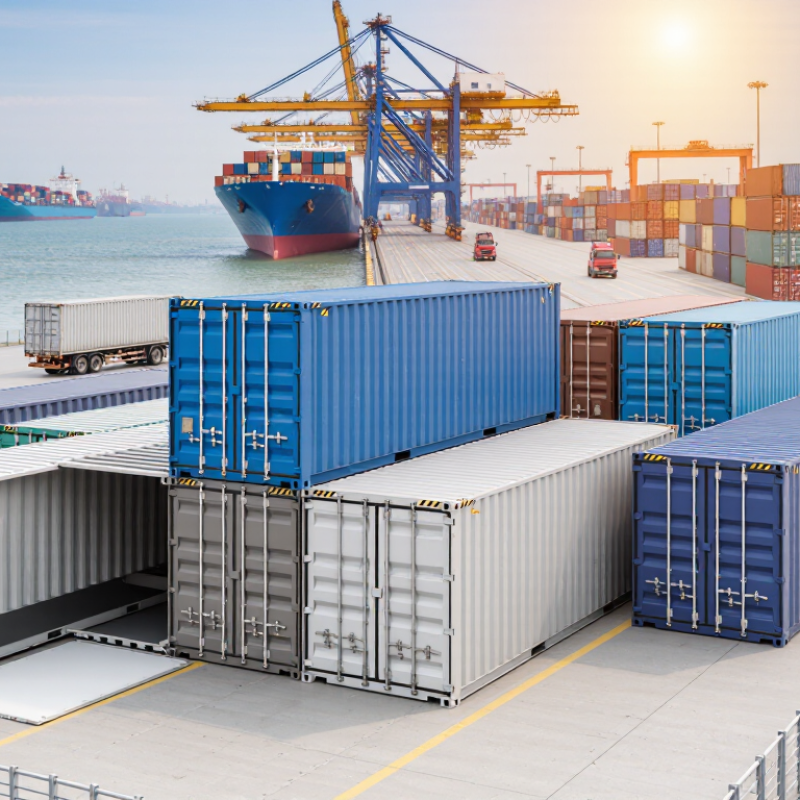
Global buyers are prioritizing practical steel container types in 2026. Standard dry containers remain the market foundation, especially 20-foot and 40-foot high-cube units. They support general cargo, machinery, packaged food, and cross-border manufacturing supply chains. UNCTAD’s Review of Maritime Transport 2024 recorded 12.3 billion tonnes of maritime trade in 2023. It also projected continued containerized trade growth, supporting demand for durable equipment.
High-cube containers offer extra internal volume for lightweight products. Reefer containers remain important for temperature-sensitive food and pharmaceutical distribution. Their insulated walls, steel frames, and monitoring systems require disciplined maintenance. Tank containers are expanding in regulated industrial transport. The International Tank Container Organisation reported approximately 801,800 tank containers worldwide in its 2024 fleet survey. This figure shows stronger adoption of standardized liquid transport equipment.
Open-top containers and flat racks serve oversized machinery, timber, and construction components. Their flexibility is valuable, but exposure increases inspection needs. Rust can begin around corner castings and door seals. Small defects become expensive delays. The World Steel Association’s 2025 outlook expected global steel demand to grow, although unevenly across regions. Forecasts can miss sudden trade shifts. Buyers should compare steel grade, coating quality, load testing, repair records, and regional compliance requirements. Price alone is a weak decision.
Material selection now depends on cargo weight, humidity, stacking pressure, and service life. The World Steel Association reported 1.88 billion tonnes of crude steel production in 2024. This scale supports broad access to carbon steel, weathering steel, and stainless grades. Yet availability does not guarantee suitability.
Carbon steel remains practical for general cargo containers. S355 or equivalent structural grades offer useful strength without excessive cost. Weathering steel can reduce repainting in suitable outdoor environments, but salt exposure may defeat its protective layer. Stainless steel, such as 304 or 316, suits corrosive or hygiene-sensitive applications. It costs more. Sometimes much more. A perfect material choice is rare.
Manufacturers should verify dimensions under ISO 668 and corner fittings under ISO 1161. ISO 1496-1 also defines important performance requirements for freight containers. Welding systems should follow ISO 3834 principles, with traceable procedures and qualified operators. Coating systems can be assessed against ISO 12944, including surface preparation and dry-film thickness. Factory checks should include weld inspection, door alignment, leakage testing, and dimensional measurement. The International Maritime Organization’s Container Safety Convention also requires approved containers to meet structural safety conditions. In practice, buyers often specify strong steel but overlook drainage details and coating repairs. That assumption deserves review. A small unsealed weld can become visible corrosion after one wet season.
What Are the 2026 Top Steel Containers for Global Buyers?
Capacity should match the cargo, route, and handling equipment. The UNCTAD Review of Maritime Transport 2024 states that over 80% of global trade volume moves by sea. That scale makes small specification errors expensive. Compare internal volume, payload, door clearance, and corner fitting dimensions. A 20-foot unit suits dense cargo, while a 40-foot high-cube unit offers more vertical space. Do not choose volume alone. Uneven loading can create dangerous axle pressure.
Durability depends on steel grade, coating quality, weld consistency, and floor construction. ISO 1496 testing covers stacking, lifting, racking, and wall strength. Ask for test records, plate thickness, corrosion-prevention details, and repair history. The World Steel Association reports that steel remains one of the world’s most recycled materials, but recycled content does not automatically prove container quality. I have seen attractive painted surfaces hide floor damage. That lesson still matters.
Safety features require practical inspection. Check locking rods, door gaskets, ventilation openings, warning labels, and twist-lock corner castings. CSC safety approval is essential for containers used in international transport. Inspectors should also examine frame distortion, rust around welds, and sharp internal edges. The International Maritime Organization’s Cargo Securing Manual principles support proper weight distribution and restraint. Yet paperwork can be incomplete. Buyers should request dated inspection photographs, serial records, and independent verification before payment. Specification sheets are useful, but they are not physical evidence.
| Container Type | Typical External Size | Approx. Internal Capacity | Typical Payload | Durability and Construction | Key Safety Features | Best Use | Buyer Comparison Priority |
|---|---|---|---|---|---|---|---|
| 20-Foot Dry Cargo Container | 6.06 m × 2.44 m × 2.59 m | About 33 m³ | Up to about 28,000 kg, subject to the container plate and local transport limits | Weathering-steel frame and corrugated steel panels; strong resistance to repeated lifting and ocean transport | CSC safety approval, locking bars, door gaskets, corner castings, lashing points, and forklift pockets where specified | General cargo, machinery, packaged goods, and dense loads | Payload rating, floor condition, door sealing, corrosion level, and valid inspection plate |
| 40-Foot Dry Cargo Container | 12.19 m × 2.44 m × 2.59 m | About 67–68 m³ | Typically about 26,000–28,000 kg, depending on the certified gross mass | Steel corner posts, roof rails, cross members, and corrugated side walls designed for multimodal handling | CSC plate, secure door gear, anti-tamper seal points, structural corner castings, and water-tight door seals | High-volume dry freight and palletized shipments | Cubic utilization, internal length, floor load capacity, tare weight, and compatibility with loading equipment |
| 40-Foot High Cube Container | 12.19 m × 2.44 m × 2.90 m | About 76 m³ | Typically about 26,000–28,000 kg, subject to certified gross mass and route restrictions | Similar structural steel design to a standard 40-foot unit, with approximately 30 cm more internal height | CSC approval, reinforced corner posts, locking rods, door seals, and clearly marked maximum gross mass | Lightweight, bulky, or tall cargo requiring additional cubic capacity | Internal height, door opening, roof clearance, stackability, and whether volume or payload is the limiting factor |
| 20-Foot Open Top Container | 6.06 m × 2.44 m × 2.59 m | About 32–33 m³ | Often up to about 28,000 kg, subject to the certified rating and cargo distribution | Steel side walls and frame with a removable roof bow and tarpaulin arrangement; suitable for top loading | Approved lashing points, secure tarpaulin system, door locking bars, corner castings, and marked load limits | Heavy, oversized, or crane-loaded cargo such as stone, scrap, and industrial components | Roof opening dimensions, lashing strength, water protection, cargo center of gravity, and floor load rating |
| 40-Foot High Cube Reefer Container | 12.19 m × 2.44 m × 2.90 m | About 67–68 m³, depending on insulation and equipment layout | Commonly about 28,000–29,000 kg, subject to the equipment plate and transport regulations | Insulated steel body, stainless or coated interior surfaces, heavy-duty floor, and powered refrigeration machinery | Temperature sensors, controller alarms, emergency release, sealed doors, electrical protection, and certified gross mass markings | Frozen and chilled food, pharmaceuticals, flowers, and other temperature-sensitive cargo | Temperature range, cooling capacity, power requirements, data logging, insulation condition, and service history |
| 20-Foot ISO Tank Container | Approximately 6.06 m × 2.44 m × 2.59 m | Usually about 21,000–26,000 litres, depending on tank design and product density | Product-specific; limited by tank volume, maximum gross mass, road rules, and liquid density | Pressure-rated metal tank mounted in a steel ISO frame; tank material and lining depend on the chemical or food product | Pressure-relief device, shut-off valves, protective valve housing, grounding provisions, test plate, and periodic inspection records | Liquid chemicals, food-grade liquids, gases, and regulated bulk liquids | Tank code, working pressure, test date, material compatibility, valve condition, cleanliness, and regulatory approval |
For 2026, global buyers are favoring steel containers that combine durability, repairability, and documented compliance. UNCTAD’s Review of Maritime Transport 2024 reported that Asia handled about 62% of global container port throughput. This supports strong demand for stackable ISO containers across China, Southeast Asia, and India. Buyers should check corner-casting dimensions, floor load ratings, corrosion protection, and availability of replacement parts.
Regional priorities differ. North American importers often value high cube capacity and fast inland transfer, especially for warehouse distribution. European buyers face tighter environmental scrutiny. The EU Carbon Border Adjustment Mechanism enters its definitive phase in 2026, making emissions data important for imported steel products. The European Commission also continues promoting reusable transport packaging, so durable containers with traceable material records may gain an advantage. Yet, compliance interpretations can vary by product classification. That remains a practical risk.
Export readiness requires more than a painted box. Under the International Maritime Organization’s SOLAS rules, verified gross mass is required before loading packed containers. The International Convention for Safe Containers also requires valid safety approval plates and periodic inspections. UNCTAD’s data shows continuing pressure on ports and shipping networks, so poor documentation can create expensive delays. Buyers should request mill certificates, coating specifications, inspection records, and a clear HS classification. A low purchase price can become costly after demurrage, inland repairs, or customs questions. Smaller exporters may underestimate these hidden costs. That mistake is easy to make.
Nominal internal volume of widely used ISO steel freight-container formats
High-cube containers provide greater vertical capacity and are commonly preferred for lightweight, bulky cargo. Standard 20-foot units are more suitable for dense cargo and routes with tighter inland transport limits, while 40-foot and 45-foot high-cube units maximize volume on long-distance export lanes.
Values are nominal internal volumes based on commonly published ISO container specifications; actual dimensions vary by manufacturer and door configuration. Global buyers should verify CSC safety-approval requirements, maximum gross mass, local road and rail axle limits, customs documentation, and reefer power requirements before export.
For 2026 procurement, selecting the right steel container means matching design with cargo, route, and handling conditions. Standard dry containers suit packaged goods and regular port movement. Open-top units work better for machinery or materials loaded by crane. Flat racks support oversized cargo, but require careful lashing and route checks. Insulated containers help protect temperature-sensitive products, although they cannot replace active refrigeration. A steel container may look strong. Its details matter more.
UNCTAD’s Review of Maritime Transport 2024 reported global maritime trade growth of 2.4% in 2023, while disruption and longer routes increased equipment pressure. The World Steel Association’s October 2024 outlook placed global steel demand near 1.8 billion tonnes for 2025. These figures suggest steady demand, but they do not guarantee smooth container availability. Buyers should inspect corner castings, door seals, weld quality, floor load ratings, and corrosion around the lower rails. CSC safety approval, ISO dimensions, and documented inspection records are essential for international use. I would not select the lowest quotation. Maintenance history is often missing.
Tips: Define cargo weight, dimensions, loading method, and destination climate before requesting prices. For humid routes, specify corrosion-resistant treatment and inspect hidden surfaces. For heavy machinery, confirm concentrated floor loads, not only total payload. Ask for recent photographs and independent inspection evidence. A perfect unit is unlikely; practical risk control matters more. Even experienced buyers sometimes overlook ventilation needs when cargo changes seasonally.
Standard 20-foot and 40-foot high-cube containers remain common. They carry machinery, packaged food, and general cargo.
They provide extra internal height and volume. Lightweight products can use the space efficiently. More room helps.
Reefer containers suit temperature-sensitive food and pharmaceutical products. Insulated walls and monitoring systems support stable conditions. Maintenance cannot be ignored.
Tank containers transport regulated liquids in standardized equipment. Buyers should verify structural condition, cleaning records, and regional requirements.
These types suit oversized machinery, timber, and construction components. Exposed cargo needs stronger inspection planning. Weather remains a concern.
Carbon steel is usually practical for standard freight containers. Structural grades similar to S355 can balance strength and cost.
Stainless steel suits corrosive environments and hygiene-sensitive cargo. It costs more. Sometimes, much more. The extra protection may still justify it.
Request weld checks, door alignment tests, leakage tests, and dimensional measurements. Inspect corner fittings, door seals, drainage points, and coating thickness.
No. Compare steel grade, coating quality, load testing, repair history, and compliance records. Cheap defects can create expensive delays.
Check surface preparation, coating repairs, drainage, and sealed welds. Salt air can defeat some protective layers. One wet season may reveal hidden weaknesses.
In 2026, Steel Containers remain essential for international storage, transport, and industrial operations because they offer strong protection, long service life, and flexible design options. Leading types include standard shipping containers, insulated units, liquid storage containers, open-top models, and specialized containers for heavy or oversized cargo. Global buyers should evaluate materials such as carbon steel, stainless steel, and weather-resistant alloys, while also checking applicable grades, welding quality, corrosion protection, and manufacturing standards.
A practical comparison should consider capacity, payload, structural durability, ventilation, locking systems, fire resistance, and safety features. Regional demand may vary according to construction, agriculture, energy, logistics, and manufacturing needs. Buyers must also review import requirements, environmental rules, labeling, inspection documents, and export specifications in the destination market. Selecting the right Steel Containers means matching the container’s size, material, protection level, maintenance needs, and regulatory compliance with the intended application. This approach helps organizations control costs, reduce transport risks, and achieve reliable performance across global supply chains.

Sanyang Racking