Steel Platforms support factories, warehouses, offshore facilities, stairs, walkways, and maintenance areas. Their performance depends on load capacity, corrosion resistance, fabrication accuracy, and installation discipline. A platform may look simple. It is not.
The World Steel Association reported approximately 1.89 billion tonnes of crude steel production worldwide in 2023. That scale shows steel’s continuing importance in industrial construction. The International Energy Agency also identifies steel as a major energy-intensive material requiring cleaner production pathways. These pressures increasingly influence platform sourcing, coating choices, recycled content, and lifecycle planning. Manufacturers now compete on more than price. They must demonstrate traceable materials, tested connections, reliable delivery, and practical after-sales support.
Edwin Basson, Director General of worldsteel, has stated, “Steel is essential to modern life and has a critical role to play in a sustainable future.” His observation applies directly to Steel Platforms, which must serve today’s operations without creating unnecessary environmental burdens tomorrow. The manufacturers and suppliers reviewed in this guide are assessed through technical capability, product range, quality systems, certifications, project experience, and regional coverage. Supplier rankings remain imperfect. A low-cost platform may become expensive after repeated repairs, difficult access, or premature corrosion. The strongest choice depends on the site, not the catalogue alone. Readers should verify current certifications, engineering calculations, delivery terms, and local compliance before purchasing.
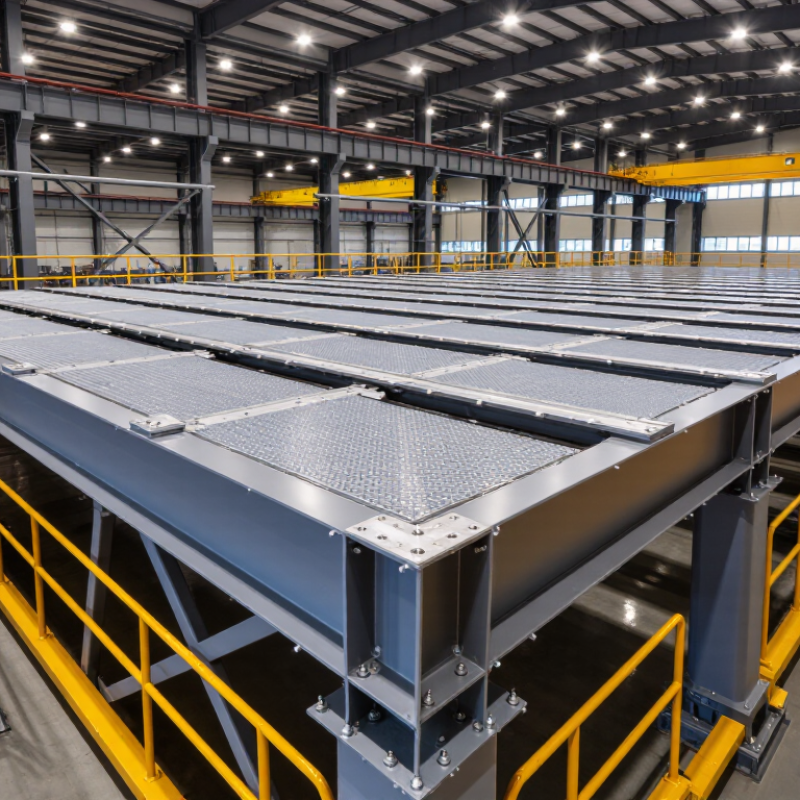
Steel platforms are elevated steel structures that create safe, usable working space above floors, machinery, or storage areas. Common forms include mezzanines, access platforms, maintenance walkways, loading platforms, and process decks. Each type serves a different purpose. A mezzanine expands warehouse space, while a catwalk supports inspection around tanks, conveyors, or production lines.
Material choice remains important. The World Steel Association reported 1,892.2 million tonnes of crude steel production worldwide in 2023. The OECD Steel Outlook 2023 also projected continued growth in global steel demand through 2025. These figures show why steel remains central to industrial construction, although high volume does not guarantee suitable platform design. Engineers must still verify load capacity, deflection, corrosion exposure, vibration, and connection quality.
Small details matter. A platform near a furnace may need heat-resistant coatings. A wet processing area may require anti-slip grating and improved drainage. Guardrails, toe boards, stairs, and emergency access must match the working environment and applicable standards. Experienced inspectors often examine welds, bolts, anchor points, and floor settlement before approving use. Designers sometimes focus too heavily on static weight. That is a mistake. Moving workers, forklifts, tools, and machinery can create dynamic loads. A rigid-looking platform may still transmit uncomfortable vibration or develop fatigue problems over time. Supplier documents should therefore include structural calculations, material certificates, inspection records, and maintenance guidance.
Steel platform manufacturers worldwide rely on material selection before fabrication begins. Carbon steel is common for industrial platforms because it offers strength, availability, and practical weldability. Structural grades should match the project’s design code, temperature range, and loading conditions.
Galvanized steel can reduce corrosion on outdoor walkways, but coating damage near welds still needs attention. Stainless steel suits humid, chemical, or hygienic areas, although its higher cost requires careful justification. Material certificates, heat numbers, and traceability records support reliable quality control. Small paperwork gaps can create serious problems later.
Engineering usually considers dead loads, maintenance loads, wind, vibration, and accidental impact. Designers may use AISC 360, Eurocode 3, or another approved regional standard. The selected code must remain consistent across calculations, connections, fabrication, and inspection. Bolted joints need checks for shear, tension, bearing, and slip. Welded joints require qualified procedures and trained personnel, often supported by ISO 3834 or equivalent requirements. EN 1090 may also guide execution and factory production control.
Deflection matters too. A platform can remain technically strong while feeling uncomfortable under foot traffic. I have seen projects focus heavily on strength and overlook drainage, access, or handrail stiffness. That is not a dramatic failure, but it reduces real-world reliability. Independent inspection, dimensional checks, weld examination, and final load verification help expose these weaknesses before installation.
Evaluating global steel platform manufacturers requires more than comparing quoted prices. Start with the intended load, working height, environment, and installation method. A supplier should provide structural calculations, steel grades, welding procedures, and dimensional tolerances. Ask for recent mill certificates and coating records. Documents matter.
Factory experience becomes clearer during a technical review. Examine weld consistency, edge finishing, drainage details, and the fit of grating panels. On one project, a platform looked robust but had poorly aligned handrail posts. That small defect created installation delays and extra labor. Request production photographs, inspection reports, and a sample before approving bulk fabrication.
Reliability also depends on communication. Measure response times, engineering support, packaging quality, and the supplier’s handling of design changes. Verify whether the quoted lead time includes drawing approval, testing, export packing, and transport. Confirm how replacement parts and site questions will be managed. A low price can hide weak after-sales support.
Independent references add useful evidence. Speak with users who installed similar platforms in corrosive, high-traffic, or outdoor conditions. Check whether the supplier uses traceable identification for major components. Review certificates carefully, but do not treat paperwork as proof of perfect workmanship. No checklist is perfect. A practical factory audit may reveal more than a polished presentation, and that lesson is easy to overlook.
Top Steel Platform Manufacturers and Suppliers Worldwide
Leading steel platform suppliers combine engineering knowledge with controlled production. They review load ratings, access routes, operating temperatures, and corrosion risks before fabrication. Experienced teams convert these details into shop drawings, cutting lists, and inspection plans. Clear communication matters.
Manufacturing often begins with certified steel and computer-controlled cutting. Formed sections are then fitted, welded, and checked for alignment. Skilled inspectors examine weld profiles, dimensions, bolt holes, and surface condition. Non-destructive testing may support critical weld verification. No process is flawless. Small measurement changes can affect installation, especially around stairs, handrails, and equipment openings.
Reliable suppliers also provide blasting, galvanizing, or protective coating services. Coating thickness is measured at several points, not only on visible surfaces. Load testing, trial assembly, and factory acceptance checks can reveal practical problems early. Some suppliers offer packaging by installation zone, reducing confusion at the job site. They may also support delivery planning, installation guidance, and replacement-part supply. Still, buyers should question vague schedules and incomplete quality records. A polished brochure cannot replace traceable certificates, responsive engineering, and documented corrective action. Good production is visible in the details: labeled components, protected edges, accurate drawings, and packaging that survives transport.
Choosing a steel platform supplier begins with the project, not a catalog. A maintenance platform inside a processing plant faces different demands than an outdoor access deck. Define live loads, equipment loads, span limits, headroom, and traffic patterns before requesting prices. Keep it measurable.
Industry conditions shape material selection. Humid coastal sites may need galvanized steel or a specified coating system. Chemical facilities require compatibility checks, drainage details, and careful fastener selection. Food and pharmaceutical areas often prioritize cleanable surfaces, closed profiles, and controlled fabrication records. Mining and heavy manufacturing may require thicker grating, impact resistance, and easier replacement.
Installation needs can change the preferred supplier. Ask for fabrication drawings, connection details, tolerances, lifting points, and a realistic delivery sequence. Suppliers with documented welding procedures, inspection records, and traceable materials offer stronger project control. Confirm whether their engineers understand applicable codes and can support field adjustments safely. That support matters. Do not judge quotations by steel weight alone. A cheaper platform may omit handrail details, access stairs, corrosion allowance, or installation hardware. Those gaps appear later, often when crews wait beside an unfinished opening. Even experienced teams miss details when drawings are rushed. Check references for similar spans and industries, not just attractive photographs. Site conditions are rarely perfect.
Structural steel grade is one of the key technical factors when selecting materials for access platforms, walkways, mezzanines, stairs, and maintenance structures. The chart compares commonly specified grades by their nominal minimum yield strength.
Reference basis: ASTM A36 and EN 10025-2 nominal minimum yield-strength requirements for standard plate and section thickness ranges. Final platform selection also requires checking design load, span, corrosion exposure, connection details, fabrication standards, coating system, and installation conditions.
Define live loads, equipment loads, span limits, working height, headroom, and traffic patterns. Keep every requirement measurable. Environmental conditions also matter.
Request structural calculations, steel grades, welding procedures, drawings, tolerances, and inspection plans. Ask for recent mill certificates and coating records. Paperwork is useful, but not perfect proof.
Review weld consistency, edge finishing, drainage details, bolt holes, and grating alignment. Inspect production photographs and recent inspection reports. A sample can expose problems early.
Misaligned handrail posts can delay installation and increase labor costs. Stair connections and equipment openings are especially sensitive. Tiny errors become expensive.
Match the coating system to humidity, chemicals, outdoor exposure, and operating conditions. Ask how coating thickness is measured across several points. Visible surfaces are not enough.
Trial assembly, load testing, zone-based packaging, and factory acceptance checks reduce site confusion. Labeled components help crews find parts quickly. Packaging must survive transport.
Compare engineering support, response times, delivery assumptions, replacement parts, and design-change handling. Confirm whether lead times include drawing approval, testing, packing, and transport. Low prices can hide missing hardware.
Contact users with similar platforms in corrosive, outdoor, or high-traffic environments. Consider a factory audit, not only a polished presentation. No checklist catches everything.
Ask for connection details, lifting points, tolerances, delivery sequences, and field-adjustment guidance. Confirm engineers can support safe changes during installation. Rushed drawings create avoidable confusion.
Steel Platforms are essential structural systems used to create safe, durable, and efficient working or access areas in industrial, commercial, construction, energy, and infrastructure projects. They may include fixed, mobile, elevated, modular, or maintenance platforms, each designed for specific load, height, access, and environmental requirements. Their construction typically relies on carefully selected steel grades, corrosion protection, precise fabrication, and engineering standards that support structural strength, stability, fire performance, and workplace safety.
When evaluating global steel platform manufacturers and suppliers, project owners should consider design expertise, material traceability, production capacity, quality control, customization services, surface treatment, delivery coordination, and installation support. Reliable suppliers should be able to manage the full process, from engineering and detailing to fabrication, inspection, packaging, and on-site guidance. The final selection should match the project’s industry, operating conditions, load demands, space limitations, maintenance needs, schedule, and budget, ensuring a practical solution that delivers long-term performance and dependable service.
Sanyang Racking